olympians
CLASS INFO & CONTACTS
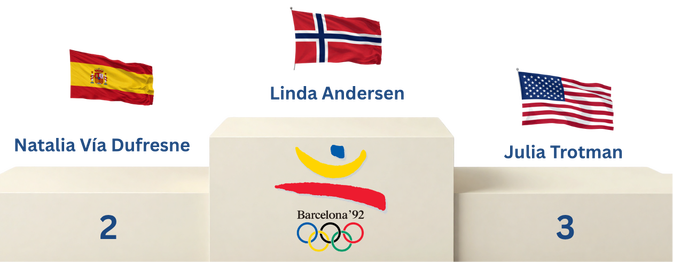
The Europe Class at the Barcelona '92 Olympic Games
The Europe Class at Atlanta 1996 Olympic Games
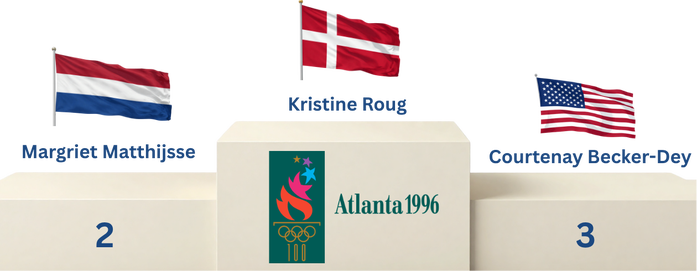
Kristine Roug
Gold Medalist 1996
Sailing the Europe dinghy has given me great experiences and lifelong friendships. More importantly, it taught me the full range of skills needed to become a complete sailor.
The strong foundation I gained in the Europe class allowed me to step into other boats and achieve great results from the start. I am grateful that the Europe was an Olympic class when I sailed, creating a highly competitive environment that helped shape me as a sailor.
Cristine Storm Lassen (Kristine Roug) - 1996 & 2000 Europe Class Olympian - 1996 Gold Medalist
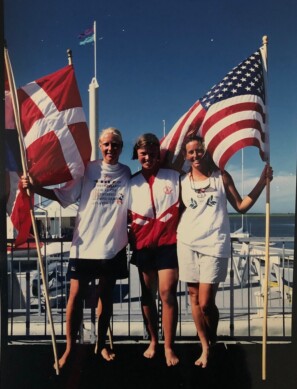
Helen Montilla
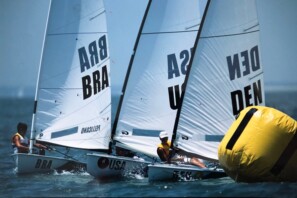
"In 1996 we were sailing some races with 30-35 knots. One day all the fleet was capsized in the downwind at the time. Fun for journalists and the television, but not so much for the sailors."
Helen Montilla recalling one of Atlanta’s Olympic race - 1996 Europe Class Olympian
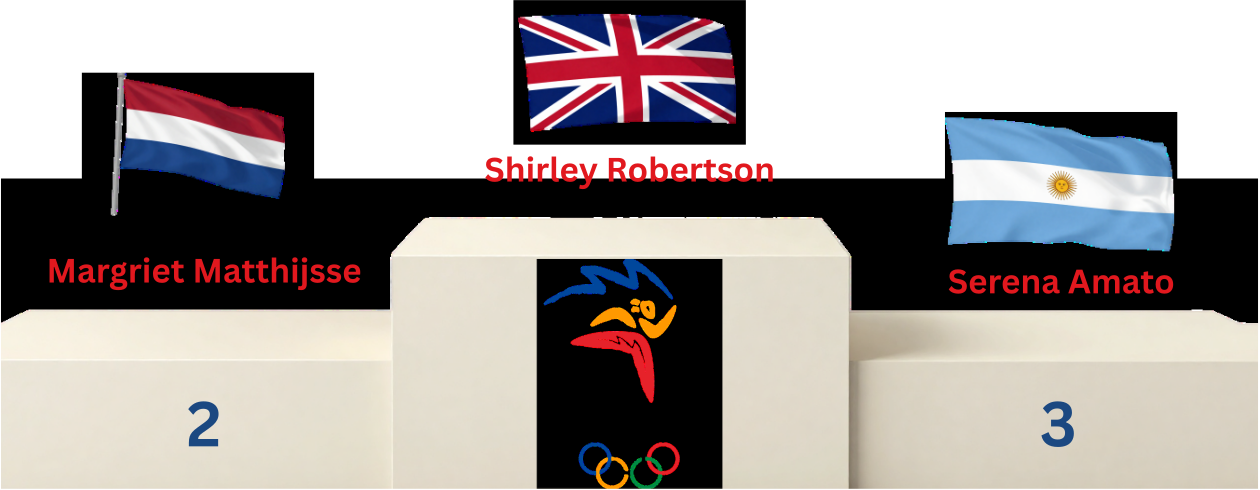
The Europe Class at Sydney 2000 Olympic Games
The Europe Class at Athens 2004 Olympic Games
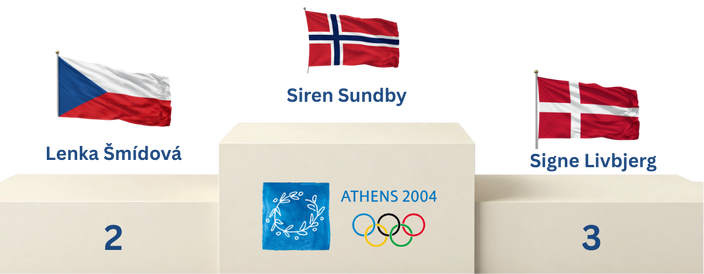
Siren Sundby
Gold Medalist 2004
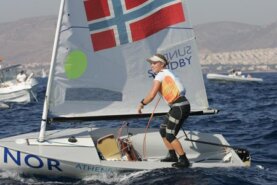
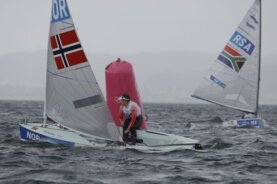
Norwegian Olympic sailor Siren Sundby, a three times Olympian: 2000 and 2004 with the Europe Class, and 2008 with the Yngling Class, and 2004 Europe class gold medallist, sharpened her sailing skills through intensive winter training camps abroad—periods that not only perfected her technique but also introduced her to the fellow sailor who would become her husband and to a circle of lifelong friends.
She described her winter training routine in a 2004 interview published shortly after her Olympic victory, emphasizing just how demanding her preparation had been in the lead‑up to the Games. Although she no longer competes regularly in the Europe Class, she still speaks about it with unmistakable fondness:
“
In Norway in the 90s and early 2000s, Europe dinghy was the primary choice after Optimist dinghy, in which we had a critical mass – around 150 boats sailing the national cups, etc, combining both female and male sailors. The best place to continue your sailing career after the Optimist.
The boat accommodates for a nice range of sailors, i.e. size, height, etc, based on the possibility to adjust the equipment (mast, sail) and trimming to the sailor – thus became the preferred choice for many in Norway and surroundings – not excluding short/light sailors (like myself), nor more heavy/tall sailors. The succeeding boat, the Laser/ILCA, limits who can participate, requiring a certain size, and typically for women – larger/taller sailors. A consequence is that very few female sailors proceed from the Optimist into the Laser.
Additionally, the boat too looks very nice, it has a great design, is “small enough”, great to sail – very responsive – and is easy to manoeuvre in any weather condition. It’s a true enjoyable experience!
It is a pity that it was rolled off the Olympic program after 2004 – which truly stopped the class in Norway, also resulting in fewer sailors continuing their sailing careers since the Laser was not an alternative to many.
Siren Sundby - 2000 & 2004 Europe Class Olympian - 2004 Gold Medalist
Sari Multala
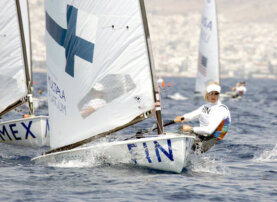
"I sailed a Europe dinghy myself from 1994 to 2005 and cherish many great memories of international competitions around the world from those days of sailing. The Europe is a fine dinghy that demands not only tactical skills but also technical knowledge and physical fitness. In fact, the Europe teaches you virtually all the basics of sailing, including how equipment evolves. It gives an excellent foundation for sailing in almost any sailing class."
Sari Multala - 2000 & 2004 Europe Class Olympian - Finnish Environment minister - Interview at the 2024 World Championship in Hanko
Petra Niemann
We have a great international community in the Europe class.
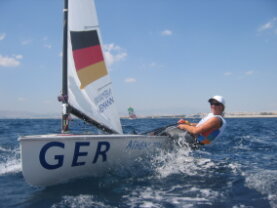
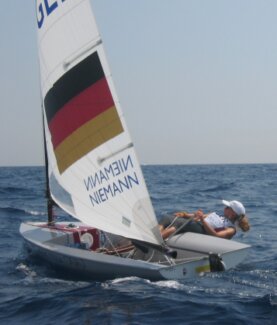
When I was about 17 years old, somewhere in 1995, we had a lot of wind and I was a little afraid. The Danish World champion at the time told me: “It is ok not to have so many kilograms on the scale, but you have to use your weight.” If you cannot stand the gybe in 6 Bfts but you keep on trying, it will be much easier to stand the gybe in 5 Bfts.
The international community was present again early 2000. When we were fighting who would go to the Olympic games for Germany, sailors from other nations were there, supporting me.
I think the Europe Dinghy is a great boat because, due to the different types and stiffness of the masts, people with different bodyweight are able to sail very successful.
After the Olympics in Sydney in 2000, I wanted to quit sailing, because I wanted to study harder and go on with the „real life“. But somebody asked me: “Why do you want to stop what you do best in your life? And really, this is the real life!”
You never have to stop doing what you love, until you don’t love it anymore. Never let the outside dominate your heart’s wishes!
Petra Niemann - 2000 & 2004 Europe Class Olympian
Monika Bronicka
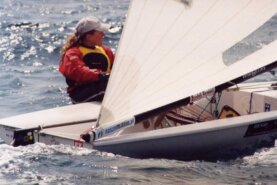
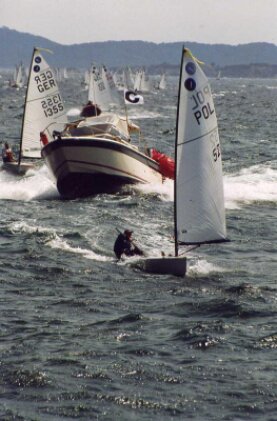
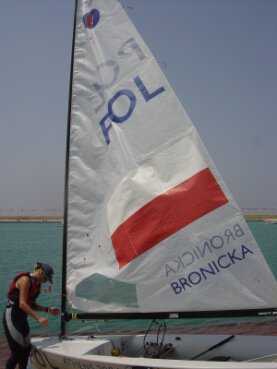
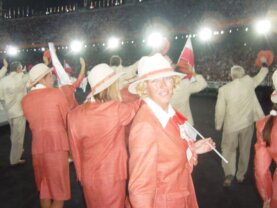
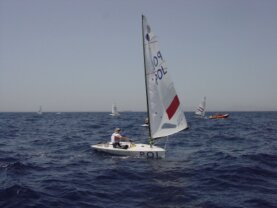
My Europe Class Journey
When I think about the Europe dinghy, I don't think first about the Olympic Games.
I think about a poster.
In 1992, during the Barcelona Olympic Games, our neighbour – who was also the Polish windsurfing coach – returned home with an official Olympic poster and gave it to me as a gift. I was still sailing in the Cadet class, just a young girl dreaming about sailing.
The poster hung on my bedroom door. Every evening before falling asleep I looked at the Olympic classes printed on it and wondered: Which one could I sail one day?
One of those names was Europe.
That was the first time I thought about this beautiful little boat.
A few years later I actually tried the 470 class, but finding the right crew proved difficult. My club decided to buy the very first Europe dinghy in our club, and suddenly that dream from the poster became reality.
Only one year later I won the bronze medal at the 1996 Junior European Championship in Turkey.
The Europe class opened every important door in my sporting career.
In 1998 I finished sixth at the World Championship and secured an Olympic qualification place for Poland for Sydney 2000. Four years later, finishing eighth at the World Championship in Canada, I earned another Olympic qualification for Poland, this time for Athens 2004.
Qualifying for the Games inside the Polish team was probably one of the hardest periods of my sporting life. It was emotionally exhausting, sometimes even painful. At that time I only saw the pressure.
Today I see something completely different.
Those years shaped my character. They taught me resilience, patience and how to deal with difficult situations — lessons that I still use every day in my professional life.
People often ask me what I remember most about the Olympic Games.
Of course, I remember walking into two Opening Ceremonies, wearing the Polish Olympic team uniform, representing my country alongside the world's greatest athletes. Those are unforgettable moments.
But I also remember something much harder.
At both Olympic Games I competed without my own coach on site. Today, when almost every Olympic sailor is supported by a full coaching team, analysts and specialists, it is difficult to imagine competing at that level without such support. Looking back, I know how much difference it made — both to my results and to my memories.
For many years afterwards I wanted to leave competitive sailing behind.
I even tried.
More than once.
But sailing never really let me go.
Life kept bringing it back to me in different ways.
An interesting coincidence happened in 2001. Although I was already competing as a senior sailor, I volunteered at the Junior European Championship in Poland and worked in the regatta press office.
At the time I never imagined that one day communication would become my profession.
Years later I worked outside sailing, mainly as a certified property valuer and court expert.
Today I have come full circle.
I am the Press Officer of the Polish Yachting Association.
Looking back, I realise that the Europe class gave me much more than Olympic starts.
It introduced me to lifelong friends, taught me discipline and resilience, opened the door to journalism and, ultimately, brought me back to sailing in a completely different role.
Looking back, I realise that the Europe class shaped the direction of my life.
Monika Bronicka - 2000 & 2004 Europe Class Olympian